.png)
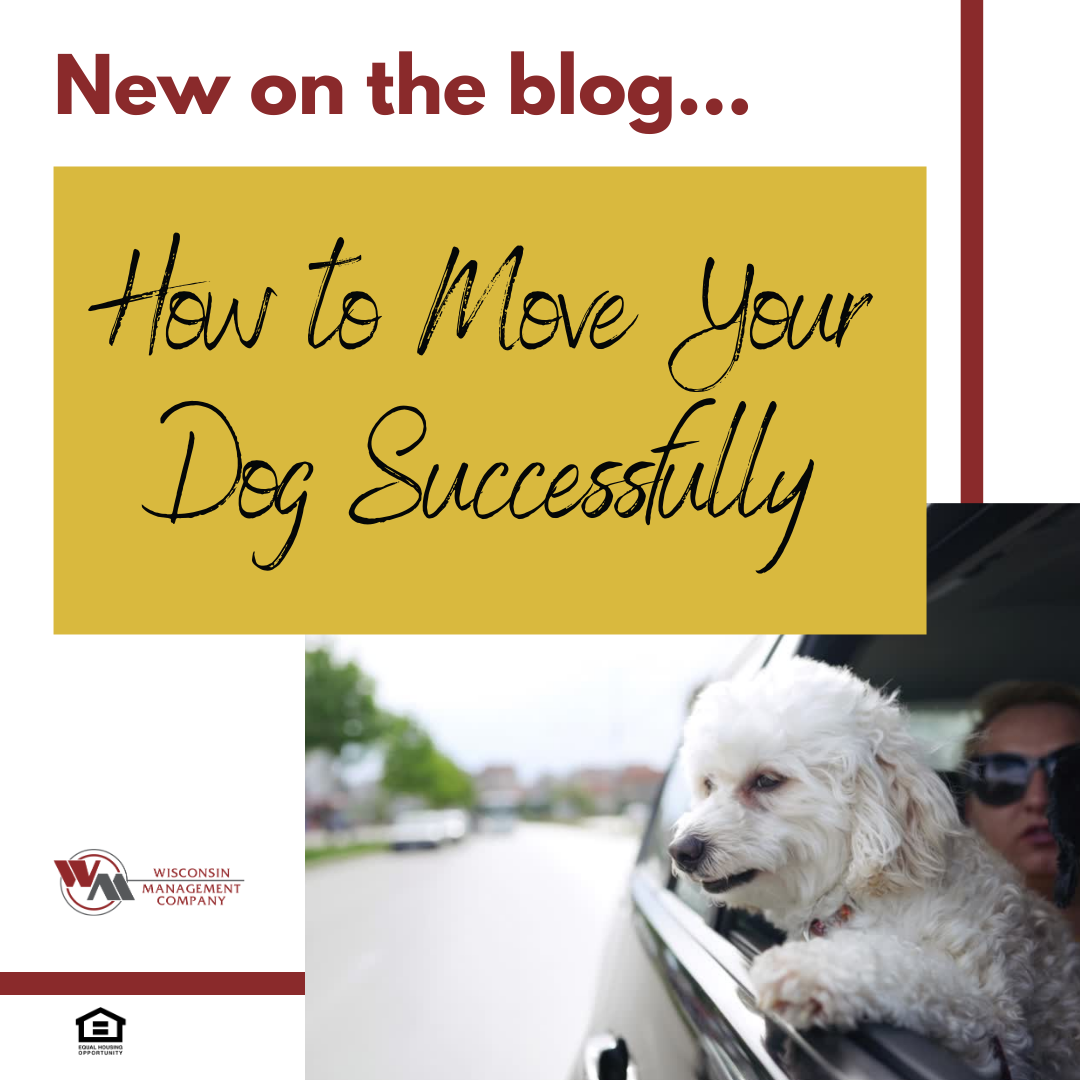
Moving is stressful for many of us, and it can be especially stressful for our pets, too. However, if you have a good plan in place and think about things ahead of time, it doesn’t have to be. If you are planning a move and you have a dog, the following are tips to consider to keep your little Fido happy, healthy, and wagging his tail in the new space.
Have a Big Picture Plan
When moving, it is important to plan out your physical move. When you have a dog, this includes how and when you will move your furry friend. Leaving your dog in the car with all of the boxes is not always what’s best for you, or for Fido. So, come up with a big picture plan of how you will physically move your pet, and how you will plan the move while minimizing the impact it has on the pup.
Increase Exercise for Fido
In the busyness, it’s easy to forget to take your dog out for a walk or to take a trip to the dog park. However, in this transition, it is extra important to prioritize exercise for your pet. Having a structured activity for Fido can lower his energy level and keep him calmer when at home. Just like for humans, structure can help keep stress at bay. And the activity might even help with your own stress levels. Tip: If you have showings at your apartment, try to walk your dog when you need to be out of your apartment. This keeps Fido and you out of the house while potential renters are there.
Save Fido’s Favorite Room For Last
In order to reduce the stress around the constantly changing environment, consider leaving Fido’s favorite room for last. Leaving the dog’s favorite room untouched longer allows for him to relax in the familiar and can help with the transition to the new space.
Crate Train Fido for Long Moves
If you are moving cross-country, or will be spending significant time in your car, consider training your dog before the move, if he is not already trained. It can be a challenge and space-prohibitive to have your dog loose in the vehicle as you travel, so start training him a month ahead of time to go in his crate. You can make this an easier and more enjoyable experience by following crate time with treats and lots of extra snuggles or play time. You want to positively reinforce your pup in the training process. Then, hopefully, Fido is ready for the journey safely in the crate on moving day.
Consider Boarding Fido
The constant coming and going of the physical move can cause undue stress for Fido, who is likely not used to all of the energy and all of the people coming in and out of the house. Call your local vet, or check out an app like Rover, and board your dog for the days you will be moving. If you are moving in town, you may want to keep Fido there until you are fully into your new space. Removing your dog from the moving day hustle and bustle can save them stress, and gives you a break from looking after them.
Reward and Reacquaint Fido to His New Home
Congrats! You’ve made it into your new space. Make sure to allow time for Fido to acquaint himself with the new environment. Unpack some of his favorite toys or his bed first, so that he has something familiar to gravitate towards. You may want to keep him on a leash as he initially explores the new space. Take him on walks often in the new neighborhood, following the same path, so it breeds familiarity in his new area. And try to relax! Dogs are very intuitive and can feed off of your feelings. Tip: You may want to find a nearby vet prior to moving so if something happens you know where to go. A meet and greet with the new vet may also be a great transitional part of your move.
We know you love your dogs, but at times like a big move it is important to set up appropriate plans to make sure things stay as familiar as possible for them. Having a game plan for their move can help eliminate last-minute stressors for you and for Fido!